Content:
1. Describe in detail what you plan to do for your 30 hours.
- I plan to go volunteer/observe what they do at Casa Colina, where there is a department for autistic children. I will also be going to different classes at an elementary school and get more information on how they teach the autistic students and what rubrics/grading/rules/... they use in the classroom.
2. Discuss how or what you will do to meet the expectation of showing 30 hours of evidence.
- Taking pictures of the work the kids do in class, and also of the activities they do inside/outside.
3. And explain how what you will be doing will help you explore your topic in more depth.
- With this I will be able to actually see how lesson plans are made and how tests/quizzes are done. Also, I will be able to see which students are the ones that need the most help in learning.
4. Post a log on the right hand side of your blog near your other logs and call it the independent component 2 log.
Thursday, February 13, 2014

Thursday, February 6, 2014
Blog 14: Independent Component 1
Content:
 Putting up classwork on the walls.
 Helping students in their writing.
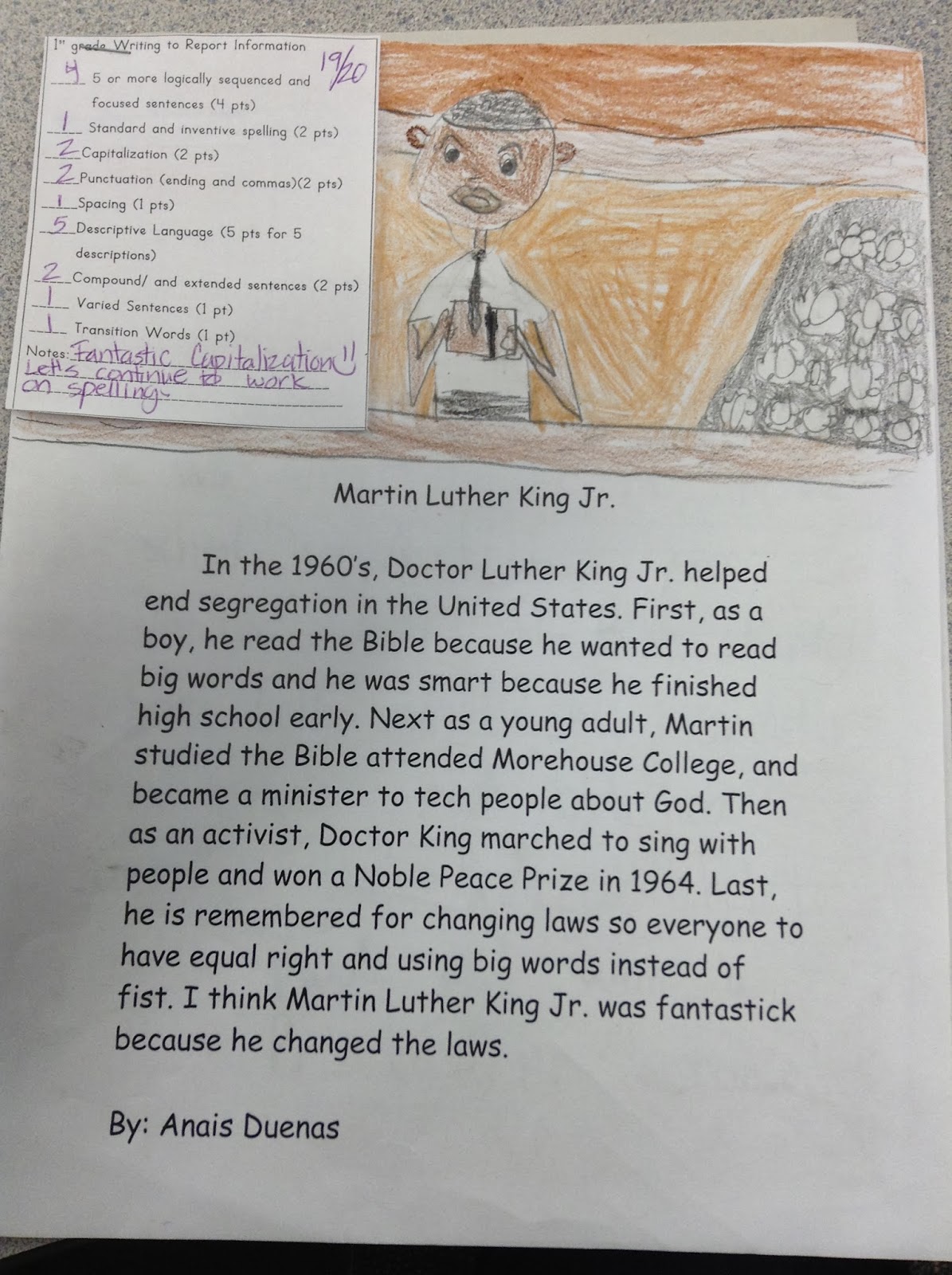 Checking vocabulary and grammar errors. For example, writing about Martin Luther King Jr. since it was MLK day and writing about his history.
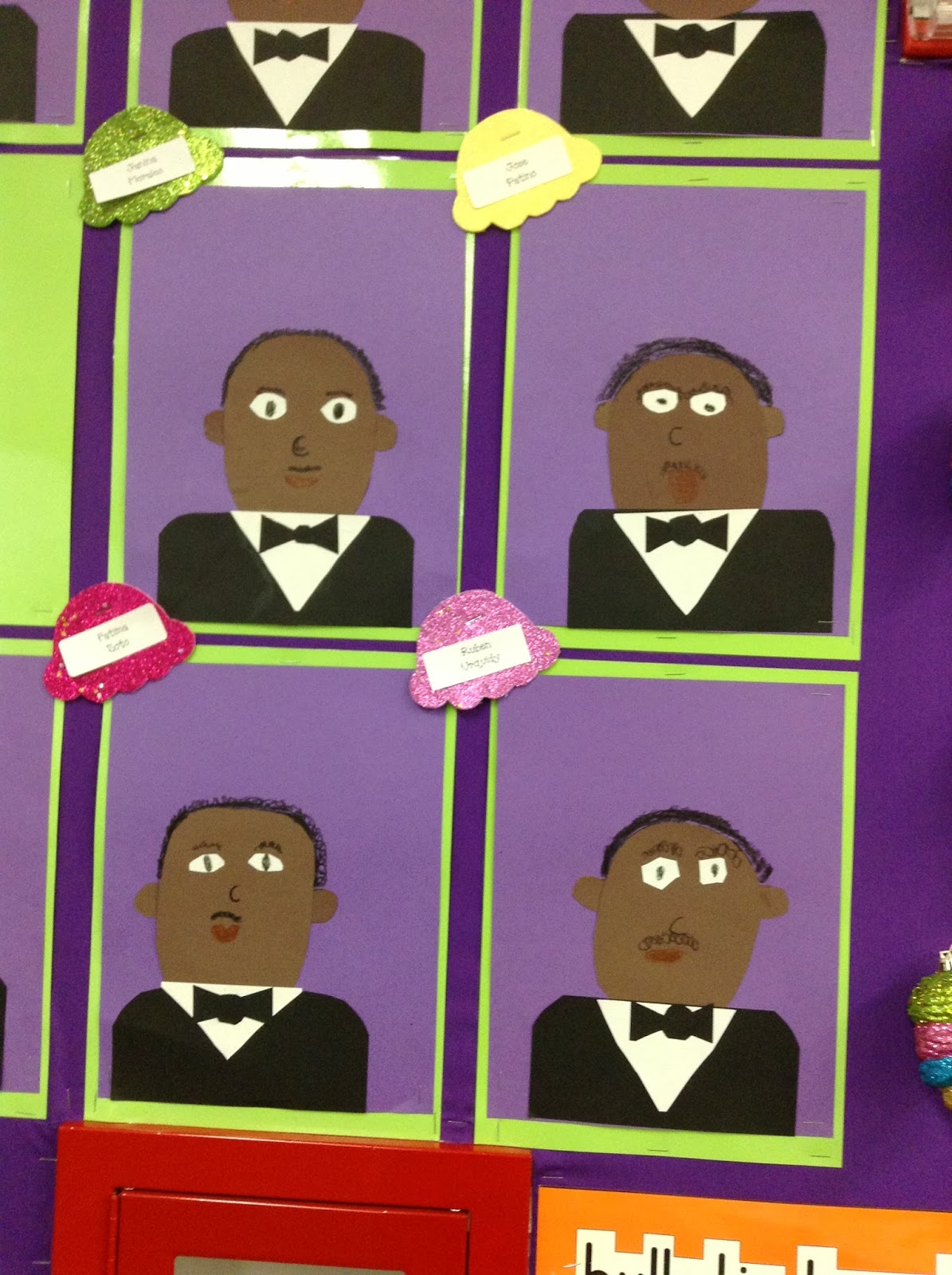 After they wrote about MLK, they created him by using construction paper and crayons.
- LITERAL
- (a) "I, Kimberly Gallardo, affirm that I completed my independent component which represents 30 hours of work."
- (b) Cite your source regarding who or what article or book helped you complete the independent component.
- Valeria.DeLaPena@pomona.k12.ca.us (Ms. De La Pena)
- Developing minds (site)
- The Autism Helper (Sasha; blogger)
- ʺIEP/Treatment Plan Objective Ideas" article
- (c) Provide a digital spreadsheet (aka log of 30 hours). Post it next to your mentorship log.
- (d) Explanation of what you completed
- During the 30 hours I've done a lot of the paper work the teacher would usually do and organizing the paper work. Recently I'm doing more than just that. For example, for Valentines Day each student brought to school a cereal box for their 'Valentine's Mail', and I had to wrap up the boxes in gift wrapping paper that was red, decorated with white polka dots with their name tag on top of the box. Also, I'm helping students with their writing when they need to write a paragraph about someone or something.
- INTERPRETIVE
- Defend your work and explain how the significant parts of your component and how it demonstrates 30 hours of work. *Provide evidence (photos, transcript, art work, videos, etc) of 30 hours of work.
Putting up classwork on the walls.Helping students in their writing. Checking vocabulary and grammar errors. For example, writing about Martin Luther King Jr. since it was MLK day and writing about his history. After they wrote about MLK, they created him by using construction paper and crayons.- APPLIED
- How did the component help you understand the foundation of your topic better? Please include specific examples to illustrate how it helped.
- It helped me understand that, first of all being a first grade teacher can be stressful on the paperwork, but it really comes a long ways. Also, there are a couple of students in class who don't really know how to write and so I am working on helping the students understand how to write. For example if a student does not know how to spell out a word, let's say "with", and they had originally written "wit" on their paper, then all I could say to them is to sound it out since saying to sound out the word is better than telling them how to spell it, it wouldn't really help if I had done that.
Saturday, February 1, 2014
Extra Blog Post: January
I am still doing mentorship at Cortez Elementary. I'm helping out a first grade teacher, doing file work and whatever there is to do. Now that I was introduced with the autistic children in pre-k, I'm going to be doing my mentorship a lot more with them. There are only a few highly autistic children that go to the classes; each go different days according to their schedule.
On the month of February I hope to visit Casa Colina where I will be able to work(hopefully) with more kids that have autism.
On the month of February I hope to visit Casa Colina where I will be able to work(hopefully) with more kids that have autism.
Thursday, January 30, 2014
Blog 13: Lesson 2 Reflection
Due Date: The day after your lesson presentation by 8:00 A.M.
Content:
1. Positive Statement
What are you most proud of in your Lesson 2 Presentation and why?
- The only thing I would be proud of is my whole presentation template (not the one I turned in) because it had all the information I was going to give out, but couldn't really get to all of it.
2. Questions to Consider
a. What assessment would you give yourself on your Lesson 2 Presentation (self-assessment)?
AP
b. Explain why you deserve that grade using evidence from the Lesson 2 component contract.
Justification of Answer: did not site quality research
3. What worked for you in your Lesson 2?
- I was able to get feedback from students afterwards on what I had missed/didn't explain. (I need to explain what autism is, so that they understand better. Also, not many people really understand what autism is.)
4. (What didn't work) If you had a time machine, what would you have done differently to improve your Lesson 2?
- Just make time to PRACTICE my presentation more.
5. Finding Value
What do you think your answer #2 is going to be?
- Something like keeping a positive mind and being supportive with the students' at all times.
Wednesday, January 15, 2014
Blog 12: Third Interview Questions
Content:
Post 10 open-ended questions for approval you want to ask an expert in the field of your senior project. The first question should be your essential question and the other nine must be about the foundation of your essential question or help you answer your essential question.
1. What is the best resource a special ed team can provide high function autistic children in elementary school to promote academic success?
2. In what ways do you communicate with your student(s)?
3. How do you teach social rules/skills?
4. How do you define your teaching style?
5. How do you use technology in the classroom?
6. What would the routine of the class be on a regular basis?
7. What are the qualities to be a good teacher?
8. Have you ever been in a situation where a student has gotten too out of hand, if so what was the situation the student was in and how did you fix the problem?
9. Are there any specific actions/words you should not use while teaching an autistic student? (sarcasm, idioms, etc.)
10. What is the most significant way to grab a students attention?
The interview itself is not due till Friday February 21st to turnitin.com.
Post 10 open-ended questions for approval you want to ask an expert in the field of your senior project. The first question should be your essential question and the other nine must be about the foundation of your essential question or help you answer your essential question.
1. What is the best resource a special ed team can provide high function autistic children in elementary school to promote academic success?
2. In what ways do you communicate with your student(s)?
3. How do you teach social rules/skills?
4. How do you define your teaching style?
5. How do you use technology in the classroom?
6. What would the routine of the class be on a regular basis?
7. What are the qualities to be a good teacher?
9. Are there any specific actions/words you should not use while teaching an autistic student? (sarcasm, idioms, etc.)
10. What is the most significant way to grab a students attention?
The interview itself is not due till Friday February 21st to turnitin.com.
Friday, January 10, 2014
Blog 11: Mentorship 10 hours check
Content:
1. Where are you doing your mentorship?
- Cortez Magnet
2. Who is your contact?
- Ms. De La Pena
3. How many total hours have you done (total hours should be reflected in your mentorship log located on the right hand side of your blog like your WB)?
- 44 hrs and 50 min.
4. Summarize the 10 hours of service you did.
- Setting up the classroom and doing file work. Also working with the students, helping them in reading and math. Doing a lot of workshops such as art workshops.
5. Email your house teacher the name of your contact and their phone number confirming who they should call to verify it.
Monday, January 6, 2014
Senior Project, The Holiday
Content:
1. It is important to consistently work on your senior project, whether it is break or we are in school. What did you over the break with your senior project?
- Since I do my hours working on Senior Project at a school I couldn't really do anything since they were also on break. But I did do some more research on my topic that way I wouldn't get too behind. I also went to go visited Los Angeles twice over break to see their medical facilities; since LA has such a large population of people.
2. What was the most important thing you learned from what you did and why? What was the source of what you learned?
- From visiting LA I know that there are an increasing amount of autistic children. Where I live I would probably see about one autistic child every week if I were to go out more frequently on a daily basis. But over in LA, in one day I've had seen about five; autistic children aren't easily seen going out during the day.
3. If you were going to do a 10 question interview on questions related to answers of your EQ, who would you talk to and why?
- A psychologist that specializes in treating and helping autistic children. They would be the most helpful because they are the ones who really get to work with the children and are specially trained to help them.
Subscribe to:
Posts (Atom)